Science Lab Vocabulary for Kids
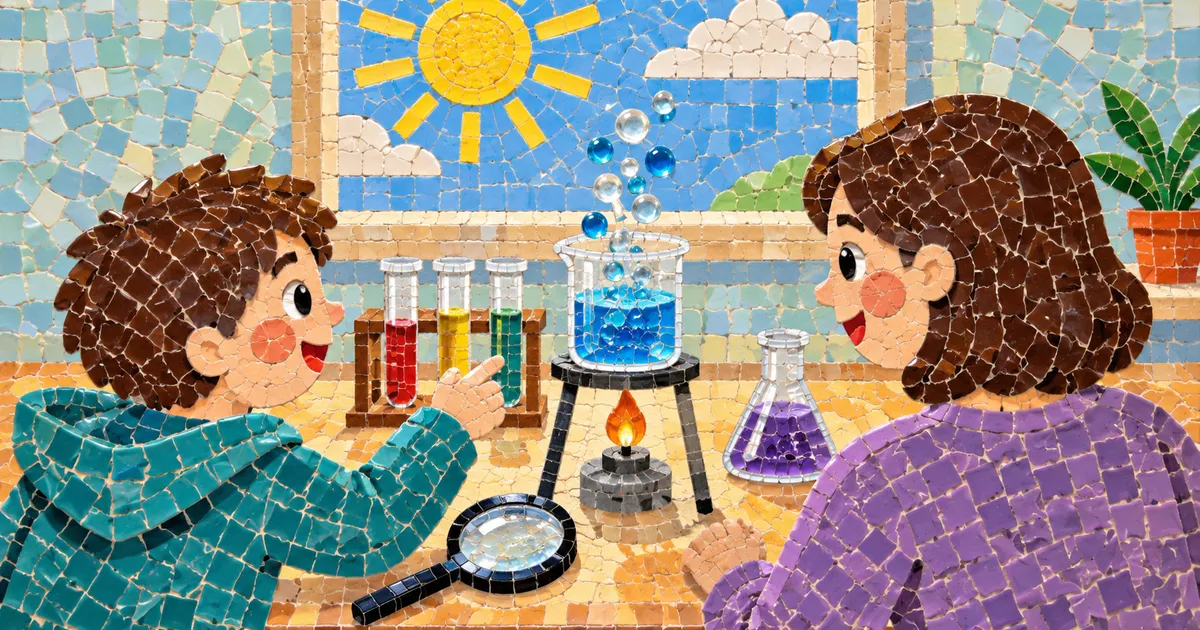
English Science Lab Words for Kids: Vocabulary and Activities covers three groups: equipment, actions, and results. Children need terms such as “beaker,” “measure,” and “change” in sentences. A young learner might say, “Pour the water into the cup,” while an older child can explain, “We measured the temperature and recorded the result.” These activities introduce lab language through safe observation, sorting, measuring, and experiments.
Core Science Lab Words and Phrases
Begin with words your child can see or act out. English Science Lab Words for Kids: Vocabulary and Activities should form a working language set, not a spelling list. Show an object, name it, demonstrate its use, and make a short sentence.
Teach a small selection first. Equipment words are concrete, while “predict” and “result” need examples. Younger children may learn “cup” before “beaker”; older learners can use both and explain the difference.
Using Lab Vocabulary in Context
English Science Lab Words for Kids: Vocabulary and Activities develops complete communication. Instead of drilling “thermometer,” teach “Use the thermometer to measure the temperature.” In LearnLink lessons, our tutors model a phrase, invite the child to adapt it, and ask a follow-up question.
Build sentences in stages. Start with “The liquid is blue.” Add an action: “We poured the blue liquid into the cup.” Then add a result: “We poured it slowly, so it did not spill.” This progression preserves the science meaning while extending the English.
Activities for Different Ages
For school-age kids, fill a sorting tray with safe household objects such as a spoon, leaf, stone, and plastic lid. Ask your child to sort by colour, shape, size, or material. Model short patterns: “It is smooth,” “They are the same,” and “The stone is heavier.” Use objects too large to swallow and supervise.
For school-age kids, try a sink-or-float investigation with water and water-safe objects. Before each test, ask, “What do you predict?” Afterwards, say, “It floated,” “It sank,” or “Our result was correct or different.” English Science Lab Words for Kids: Vocabulary and Activities works when the child speaks before, during, and after each test.
For school-age kids, add fair-test language. A learner can compare how equal amounts of sugar dissolve in cold and warm water while an adult controls the temperature. Teach “variable,” “same amount,” “record,” and “conclusion.” Ask what changed, what remained the same, and what the results show.
A Simple Practice Routine
A short routine makes English Science Lab Words for Kids: Vocabulary and Activities manageable. Review five or six familiar words, introduce two new ones, and finish with a spoken explanation. Repeat sentence frames, changing the object or result so the child must think.
Try the Predict-test-report Challenge
Choose one safe object and a cup of water. Say, “I predict the object will float or sink.” Test it with an adult. Report, “The object floated or sank. My prediction was correct or different.” Add one observation about its colour, shape, size, or material.
Reuse the words elsewhere. Ask your child to find a liquid in the kitchen, compare two pencils, or measure a book. The child can sketch a pretend lab, label its equipment, and give three safety instructions using “wear,” “do not touch,” and “ask an adult.”
Common Mistakes and How to Correct Them
Teaching nouns without verbs limits communication. A child may recognise “funnel” but cannot explain its purpose. Pair each object with an action: “Use a funnel to pour liquid into a narrow container.” Then ask the child to change one sentence element.
Avoid correcting every grammar slip during an experiment. If your child says, “It sink,” respond: “Yes, it sinks. Why does it sink?” The child hears the correct form without stopping the investigation. Save detailed corrections for the final review.
Do not push children away from their other languages. A multilingual learner can label a diagram in two languages, discuss a prediction at home, then report it in English. Preserve the scientific idea while building the English phrase. Teach that “equipment” is uncountable: say “some equipment” or “a piece of equipment,” not “an equipment.”
- Try sorting six lab picture cards with children aged seven to nine.
- Practice saying microscope, beaker, and goggles slowly three times together.
- Use a science picture book to correct one mislabeled tool each evening.
- Model full sentences about using goggles to protect eyes during play.
- Review five English science lab words weekly using a simple matching game.
When a word has several meanings or pronunciations, Cambridge Dictionary is a useful check before turning it into child-friendly examples.
Frequently Asked Questions

How Many Science Lab Words Should My Child Learn at Once?
Begin with six to ten words from one activity. A younger child may focus on “cup,” “water,” “pour,” “mix,” “wet,” and “dry.” An older learner can add “sample,” “measure,” “predict,” and “result.” Use English Science Lab Words for Kids: Vocabulary and Activities as a menu, not a test. Add terms after your child uses the earlier words in short sentences.
Does My Child Need Real Laboratory Equipment?
No. Language practice can begin with cups, spoons, jars, paper, water, and safe household materials. Name each object accurately, then introduce specialist terms through pictures or supervised demonstrations. A cup is not a beaker, but both hold liquid. Children must not handle heat, glass, chemicals, sharp tools, or unknown substances without suitable adult supervision.
What Should I Do If My Child Forgets a Word?
Give a clue instead of supplying the answer. Point to the object, show the action, offer the first sound, or give two choices: “Is it a funnel or a balance?” After your child recalls the word, request a short phrase and full sentence. Revisit the word in another activity so recall does not depend on one picture.
How Can My Child Practise Lab Vocabulary Without Doing an Experiment?
Use diagrams, matching cards, object hunts, or pretend instructions. Your child can label a lab picture, arrange actions in order, or explain how to measure and record an object. Short videos provide listening practice when an adult pauses to check meaning. Encourage active use: ask the child to describe, compare, predict, and report instead of repeating isolated words.
Start your child's English journey today — book a trial lesson with LearnLink.
Stay updated on our latest tips and resources by following us on Instagram LearnLink.